Choosing a Fiberglass Pool Installer in Flat Rock, MI: Process, Site Conditions, and Timeline

Backyard pool projects go sideways for predictable reasons: a shell ordered before anyone studied the site, an excavation that hits groundwater at four feet, a patio set at an elevation that fights the pool coping instead of meeting it.
The fiberglass pool installer you hire in Flat Rock, MI decides which version of that story plays out in your yard. Our team has been building outdoor spaces across Wayne County since 2003, when Gino founded GLC Landscaping & Pools as a family business here in Flat Rock, and he still runs pool installation crews in the field as a licensed builder.
This guide walks through what the work involves, how Michigan ground and weather shape the schedule, what the finished space needs around it, and how to read a proposal before you sign one. You are the one living with the result for the next two decades, so the questions below are the ones worth asking early.
Related: How an Automatic Pool Cover Bolsters Your Pool Safety
What Does a Fiberglass Pool Installer Actually Do?
A fiberglass pool installer sets a factory-built shell into a prepared excavation, then builds every system that keeps the shell level, supported, watertight, and usable. The shell arrives finished. Everything that determines whether it stays true for twenty years happens on site.
That work covers site layout and elevations, excavation, a compacted gravel base, plumbing and equipment sets, backfill in controlled lifts while the pool fills in step with the backfill, electrical bonding, and the deck or patio that ties the pool into the rest of the property. Municipal inspections punctuate the sequence.
The distinction matters because the shell manufacturer warrants the shell. The installer warrants the installation. A cracked coping line, a settled patio edge, or a shell that shifted during backfill traces back to site work, not to the factory. That is the reason our fiberglass swimming pool crews and our pool design and construction team plan the pool and the surrounding hardscape as one drawing rather than two separate jobs.
Homeowners often meet an installer who handles the pool and then hands the yard to someone else. Splitting the scope creates the gaps where problems appear: mismatched grades, a patio that drains toward the shell, a fence that arrives after the water does.
How Long Does It Take to Install a Fiberglass Pool?
Once the excavator arrives, a straightforward fiberglass pool installation typically runs two to four weeks of active site work. The shell drops in on day one or two. The remaining time goes to plumbing, backfill, electrical, decking, and inspections.
The full calendar looks different. Design, shell selection and ordering, permitting through your municipality, and utility locates usually add several weeks or months ahead of the excavation date. Southeast Michigan pool crews book their construction season early, so a spring conversation generally produces a summer build, while a late summer conversation often points at the following season.
Weather adds the variable nobody controls. Saturated ground stops excavation and compaction, and heavy clay refuses to compact properly when it is too wet. A crew that pauses for three days after a storm is protecting your investment rather than padding a schedule.
What Lengthens a Timeline
Late decisions on the patio material, a change to the shell model after ordering, and utility conflicts discovered during locates are the three most common delays we see. Settling the full design before the shell is ordered removes most of that risk.
What Does the Fiberglass Pool Installation Process Look Like Step by Step?
The sequence is consistent, and understanding it makes a proposal much easier to read.
Design and layout. Elevations, setbacks, sun angles, and access routes for equipment get established first. Access matters more than most homeowners expect, because a shell arrives on a trailer and often needs a crane and a clear path across the yard.
Permitting. Applications for the pool, the barrier, and the electrical work go to the municipality. Wayne County communities each apply their own review timelines.
Excavation. The hole is cut to the shell dimensions plus working room, with the bottom shaped to the exact profile of that model.
Base preparation. A compacted gravel base is placed and leveled to a tight tolerance, because the shell bears on it directly.
Set and plumb. The shell is craned in, checked for level, and plumbed. Skimmers, returns, and main drains are tied to the equipment pad.
Backfill and fill. Water goes into the pool while gravel backfill goes around it in matched lifts, keeping the pressures balanced on both sides of the wall.
Deck, bonding, and inspections. Electrical bonding, the concrete or paver deck, final grading, and the inspection sign-offs close out the build.
Where the Detail Work Hides
The steps that decide long-term performance are the least visible ones: the compaction of the base, the evenness of the lifts during backfill, and the drainage designed under and behind the deck. Those are the details worth asking about when you compare bids.
Do Fiberglass Pools Hold Up in Michigan Winters?
Fiberglass shells perform well in freeze-thaw climates because the material flexes slightly with ground movement instead of resisting it the way a rigid surface does, and pools in Downriver communities routinely go through fifteen or more winters without structural issues.
Winterizing follows a specific method for fiberglass. The water level is lowered only to the point the manufacturer specifies, and no further, because an empty or nearly empty shell loses the internal water pressure that balances the soil pressure outside it. Lines are blown clear and plugged, and the cover goes on.
Frost depth in southeast Michigan sits around 42 inches, which drives the burial depth of plumbing runs and the detailing at the equipment pad. Crews working this region size those runs for local frost rather than for a national default.
Groundwater is the other regional factor. Parts of Flat Rock, Brownstown, and Rockwood sit on flat ground with a high water table, and a hydrostatic relief valve plus a properly built gravel envelope handle the upward pressure that condition creates. Skipping that detail is how a shell floats.
Related: How Pool Maintenance Equates to a More Efficient Pool
How Long Do Fiberglass Pools Last?
A well-installed fiberglass shell generally lasts 25 years or more, and the gelcoat surface commonly holds its finish for decades without resurfacing. That longevity is the reason the installation quality carries so much weight: the shell will outlast a poor base if the base is what fails.
Maintenance stays light compared with other pool types. The nonporous surface resists algae, which reduces chemical demand, and there is no liner replacement cycle to plan around. Our post on pool maintenance and efficiency covers the equipment side of that equation.
The parts that do age are the ones you expect: pumps, heaters, automation, and covers. Planning for replacement of those components every ten to fifteen years keeps the yearly cost predictable.
Which Hardscape Features Belong Around a Fiberglass Pool?
The pool is one element in a space you will use for entertaining, and the surround does most of the work of making it comfortable. A paver deck with a non-slip surface and correct pitch away from the coping keeps water off the shell edge and out of the equipment area.
Elevation changes give the space structure. A seating or retaining wall creates a defined edge and doubles the seating available at a party without adding furniture. Where the yard slopes toward the house, a wall also solves the drainage problem the pool would otherwise create.
Evening use depends on lighting. Fixtures on the steps, the wall caps, and the surrounding beds through our landscape lighting service extend the usable hours well past sunset and make the barrier and grade changes visible.
Cooking, Fire, and Shade
An outdoor kitchen placed on the dry side of the deck keeps the host out of the traffic pattern between the water and the house. A fire feature at the far end of the patio gives the space a second gathering point for the shoulder months, and a pergola or pavilion adds shade over the seating area where afternoon sun is strongest.
Our patio and walkway work ties those zones together with consistent materials so the yard reads as one designed space.
Planting closes the picture. Beds sized correctly around a pool deck screen the equipment pad, soften the hardscape, and keep leaf litter manageable if the species are chosen with the water in mind. Our landscape design team plans those beds alongside the pool drawing.
What Permits and Safety Requirements Apply Around Flat Rock, MI?
Michigan residential pools require a barrier, and local ordinances set the specifics on height, gate hardware, self-latching direction, and the maximum gap beneath the fence. Wayne County municipalities apply the state framework with their own variations, so the barrier detail belongs in the design phase rather than the punch list.
Electrical bonding is a separate and non-negotiable inspection item. Every conductive element within a defined distance of the water gets bonded into a common grid, including the shell reinforcement points, the deck reinforcement, ladders, and nearby metal fencing.
Automatic safety covers satisfy part of the barrier requirement in many jurisdictions and add a layer of protection that a fence alone does not provide. We covered the local specifics in our article on pool fence code considerations for Flat Rock homeowners, and the practical side of covers in our piece on how an automatic pool cover supports pool safety.
Site Conditions That Shape a Downriver Pool Excavation
Flat Rock and the surrounding Downriver communities sit on flat terrain with clay-heavy soil over a shallow water table. Three consequences follow for any pool build here.
Clay drains slowly, so the gravel envelope around the shell and the drainage behind any retaining wall carry more of the load than they would in sandy ground. Water that has nowhere to go finds the lowest point in your yard, and after a pool goes in, that point is often the excavation.
Flat ground means positive drainage has to be designed rather than assumed. A deck pitched a quarter-inch per foot away from the coping, tied into a swale or a drain line, prevents the ponding that shows up along patio edges in the second or third season.
Shallow groundwater governs the dewatering plan. Crews working wet sites run pumps during excavation and set the hydrostatic valve so the shell stays put when the water table rises in spring. Our project process page outlines how those site questions get answered before the excavator books a date.
Mature trees add a fourth factor. Root zones dictate where the shell sits and where the crane stages, and a tree that survives construction but loses half its root plate rarely survives the following summer.
How Do You Choose a Fiberglass Pool Installer?
Start with who does the work. Ask whether the pool crew is employed by the company or subcontracted, and ask the same about the patio, the electrical, and the landscape. Every handoff between trades is a place where responsibility gets blurry.
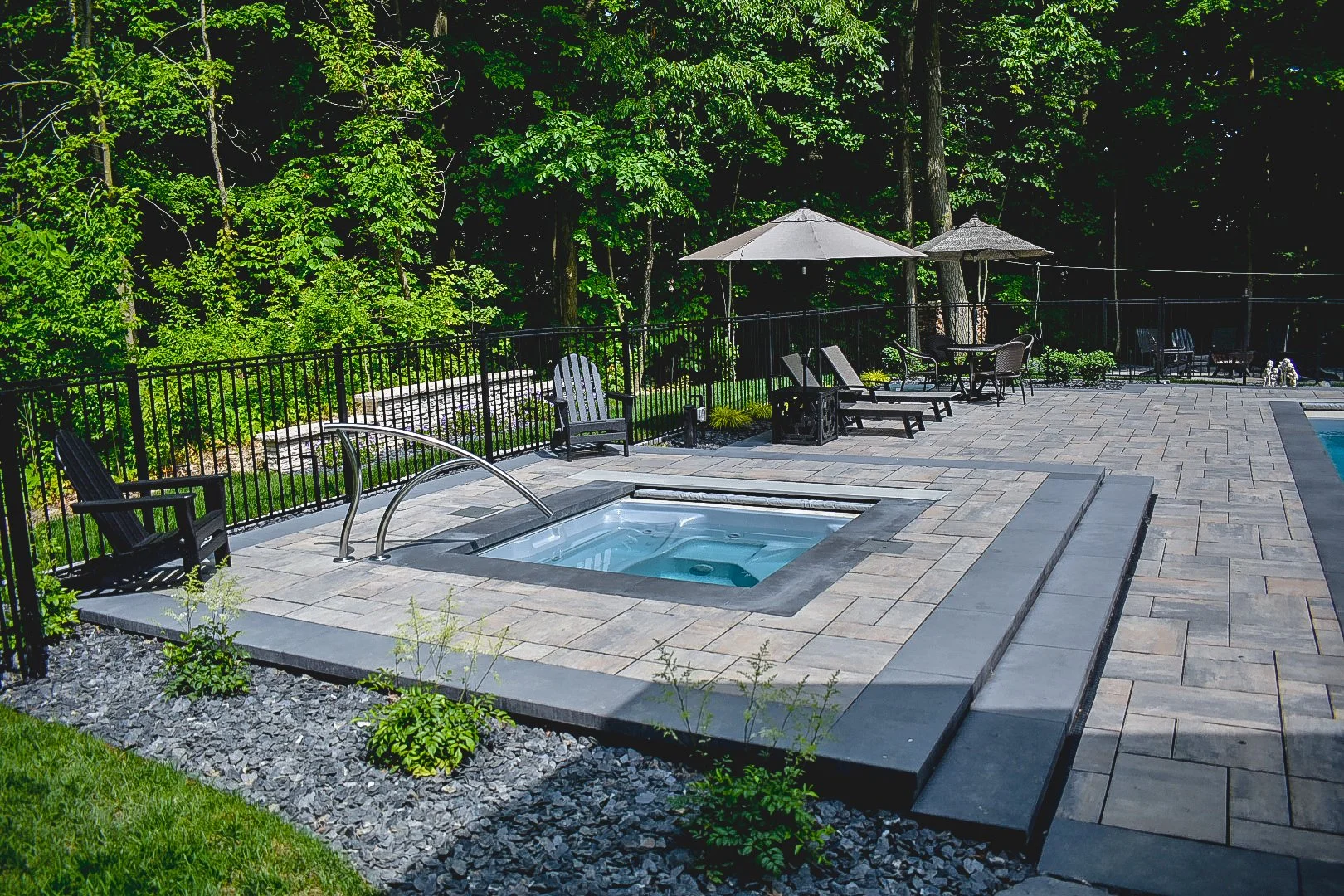
Ask to see completed projects in your area that are at least three years old. New photos show finish quality. Older projects show whether the base held, whether the coping line stayed straight, and whether the patio settled. Our gallery of completed work and the Westerbeek pool and spa case study show finished backyards in Downriver communities.
Read the proposal for what it excludes. Backfill material, deck square footage, fencing, dewatering, tree protection, and final grading are the line items most often left out of a low bid and added later as change orders.
Confirm the license and the inspection record. A licensed builder pulls the permits under their own name and stands in front of the inspector, which is a different relationship than a crew working under a homeowner-pulled permit.
Finally, ask who answers the phone in year three. GLC has served the same Downriver communities across more than 1,600 completed projects and 200-plus five-star reviews, and our service area page lists the communities our crews cover.
Schedule a Fiberglass Pool Consultation with GLC Landscaping & Pools
If a pool is on your list for next season, the useful first step is a site conversation rather than a shell catalog. Our designers walk the property, check access and elevations, talk through how you plan to use the space, and produce a drawing that shows the pool, the patio, the walls, the lighting, and the planting as one finished yard.
Reach out to our team to book that visit, and ask about project financing while you are planning the budget. Design and build your fiberglass pool with GLC Landscaping & Pools.
In Summary
How long does a fiberglass pool installation take in Flat Rock, MI?
Typically two to four weeks of active site work once excavation begins, with design, shell ordering, and permitting adding weeks or months ahead of that date.
Do fiberglass pools work in southeast Michigan winters?
Fiberglass shells flex with freeze-thaw ground movement rather than resisting it, and correct winterizing plus plumbing buried below the local 42-inch frost line keeps them sound through the season.
What should a fiberglass pool installer include beyond the shell?
Site layout, excavation, a compacted base, plumbing and bonding, staged backfill, drainage, the deck or patio, and the barrier required by your municipality.
Which local conditions matter most in Flat Rock, Brownstown, and Rockwood?
Clay soil, flat grade, and a shallow water table, which together drive the gravel envelope, the hydrostatic relief detail, and the pitch of the surrounding deck.
Related: Stylish Plunge Pool and Outdoor Living Features for Allen Park, MI Homes
About the Author
GLC Landscaping & Pools is a full-service landscaping company that over-delivers. They believe that a beautiful landscape can transform residential and commercial properties, but most home and business owners don’t have the time to design, build, and maintain an outdoor space. With a goal to elevate your property to its fullest potential, GLC can help you spend more quality time outside.