How Pool Maintenance Equates to a More Efficient Pool
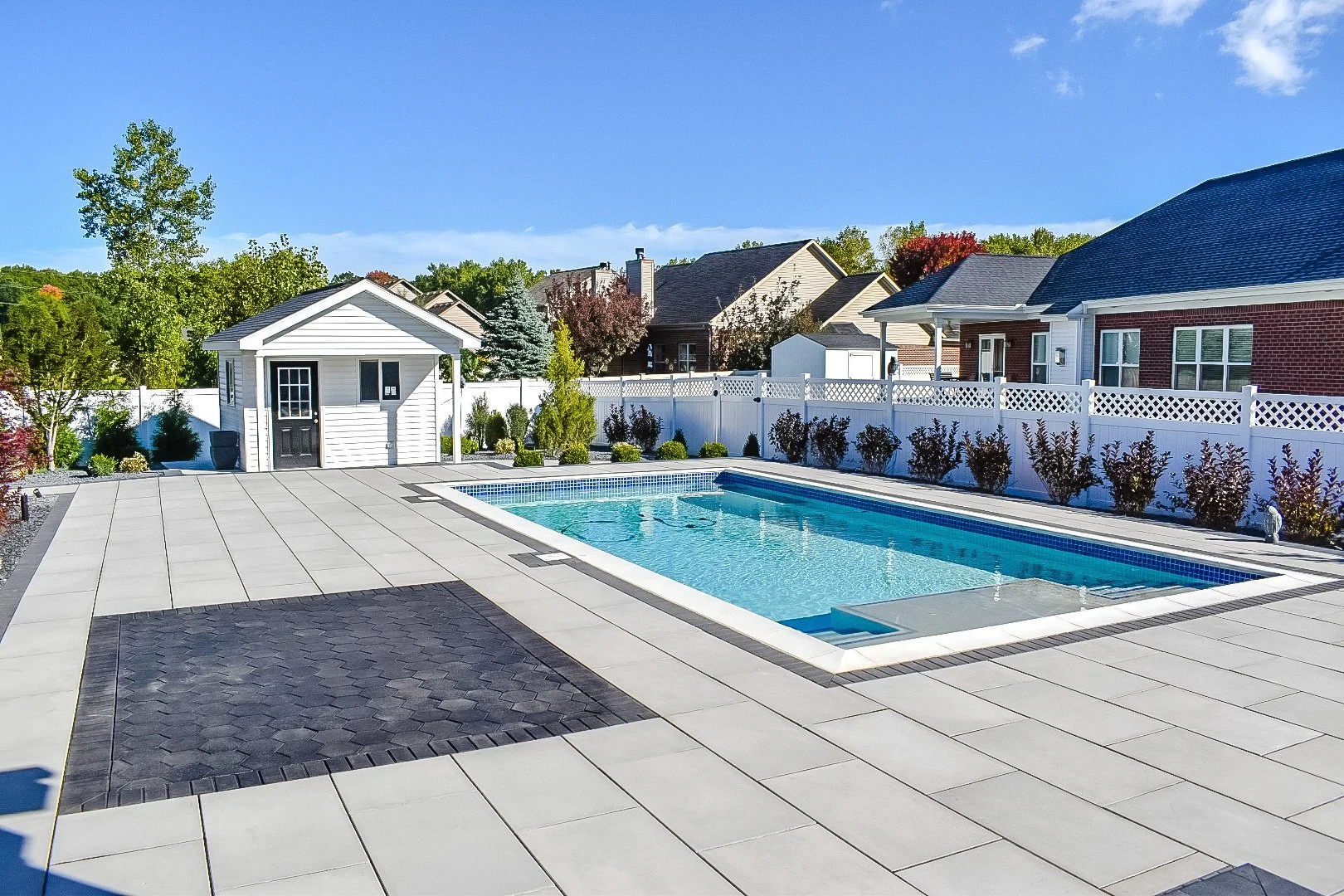
A truly exceptional pool experience doesn’t happen by accident—it’s the result of thoughtful design, expert installation, and ongoing professional care. At GLC Landscaping & Pools, we approach every project with that full lifecycle in mind. As a trusted pool company serving Southeast Michigan, we ensure efficiency isn’t just about equipment—it’s about how every element works together for long-term performance, reliability, and effortless enjoyment.
Why Is Pool Maintenance Important?
Pool maintenance is not just a routine service—it’s a performance strategy.
When a pool is professionally maintained, every system operates as intended. Water chemistry stays balanced, equipment runs efficiently, and the entire environment remains stable despite external factors like weather, debris, and temperature swings. This consistency is what separates a pool that simply functions from one that performs at a high level day after day.
In Southeast Michigan, those external factors are not minor—they are constant and demanding. Seasonal pollen in the spring, heavy summer storms, falling leaves in the fall, and sharp temperature fluctuations all place ongoing stress on your pool system. Without consistent, expert care, even a well-built pool can begin to lose efficiency, requiring more energy, more chemicals, and more intervention to maintain the same level of performance.
According to Hayward, a leading expert in pool equipment and system design, proper maintenance is one of the most critical factors in maintaining energy efficiency and overall system health. Clean filters, balanced water, and unobstructed circulation allow pool systems to operate as designed—without overworking or compensating for preventable issues.
Here’s what proper maintenance ensures:
Optimal water balance: Protects finishes, prevents scaling, and maintains swimmer comfort while reducing chemical demand
Efficient filtration: Keeps water clear while allowing pumps and filters to operate without unnecessary strain
Equipment longevity: Prevents premature wear on pumps, heaters, and filtration systems
Consistent performance: Eliminates fluctuations that lead to increased energy consumption and system inefficiency
Visual excellence: Maintains the clean, polished look expected from a premium outdoor space
At GLC, maintenance is not an afterthought—it’s part of a larger, structured approach to outdoor living. We design and build with long-term performance in mind, and our ongoing care reflects that same level of precision. The result is a pool that not only looks exceptional, but operates exactly as it should—efficiently, reliably, and without disruption.
How To Make Your Pool More Energy Efficient
Energy efficiency starts long before the pool is filled with water. It begins with how the pool is designed, how systems are integrated, and how the entire outdoor space is constructed.
At GLC Landscaping & Pools, we specialize in fiberglass pool installations that are intentionally designed for efficiency. Fiberglass pools offer a naturally smooth, non-porous surface that reduces chemical demand and improves circulation—two key contributors to energy savings. This built-in advantage allows the system to maintain balance with less effort, which directly translates to lower operational strain.
But efficiency doesn’t stop at the pool shell. It’s the combination of systems, layout, and construction that makes the difference between a pool that performs and one that constantly requires adjustment.
Design-Driven Efficiency Considerations:
Integrated layouts: Pool, patio, and surrounding landscape are designed as one cohesive system, eliminating inefficiencies caused by disconnected elements
Strategic placement: Maximizes sun exposure when beneficial and minimizes debris accumulation from surrounding trees and structures
Proper grading and drainage: Prevents runoff contamination, reducing the burden on filtration systems and maintaining water clarity
Construction Elements That Support Efficiency:
High-quality paver coping and hardscapes: Improve durability while minimizing long-term maintenance demands
Professional installation practices: Ensure all systems—from plumbing to filtration—are installed correctly and operate efficiently from day one
Thoughtful material selection: Built to withstand Michigan’s freeze-thaw cycles, preventing damage that can compromise system performance
Hayward emphasizes that one of the most effective ways to improve pool efficiency is through proper system design and ongoing maintenance—specifically highlighting the importance of clean filtration, optimized circulation, and minimizing unnecessary system run time. These principles align directly with how we approach every project at GLC.
Efficiency is not created through a single upgrade or feature. It is the result of a well-planned, professionally executed environment where every component works together seamlessly.
When everything is planned and executed together, the result is a pool that doesn’t have to work harder than it should. It simply performs.
How To Save Electricity With A Pool
Electricity usage in a pool system is largely driven by how efficiently the equipment operates—and how often it’s forced to compensate for poor conditions.
A professionally maintained and properly constructed pool naturally consumes less energy because it avoids the common inefficiencies that drive costs up. Instead of overworking to correct imbalances or push water through clogged systems, it operates in a steady, optimized state. This is where thoughtful design, proper installation, and ongoing service all come together—because energy efficiency is not created in a single moment, it’s maintained over time.
When systems are clean, calibrated, and functioning as intended, they don’t need to run longer than necessary. That alone can make a significant difference in overall energy consumption—especially during peak usage months.
Here’s how our approach helps reduce electricity usage:
Efficient System Operation
Clean filters allow pumps to run at lower strain, reducing energy demand and improving overall circulation
Balanced water reduces the need for extended filtration cycles and prevents unnecessary system runtime
Proper circulation prevents dead zones that require corrective run time and additional energy use
Optimized system flow ensures water moves efficiently through the entire system without resistance or backup
Reduced Equipment Stress
Regular inspections catch small issues before they become energy-draining problems or system inefficiencies
Systems operate within intended parameters—not overcompensating for neglect, buildup, or imbalance
Consistent care extends equipment lifespan and preserves efficiency across pumps, filtration, and supporting systems
Well-maintained components reduce friction, blockage, and wear—allowing everything to operate smoothly
Smarter Overall Performance
A well-maintained pool reaches and maintains equilibrium faster, requiring less active system intervention
Less fluctuation means fewer system adjustments, shorter run cycles, and reduced energy consumption
Clean, balanced water requires less correction, fewer chemicals, and less mechanical effort
Stable conditions allow for predictable, efficient operation instead of reactive, high-energy corrections
According to Hayward, one of the most effective ways to reduce pool-related electricity usage is by minimizing unnecessary pump run time, maintaining clean filtration systems, and ensuring proper water flow throughout the pool. When circulation is unobstructed and systems are not compensating for debris or imbalance, energy demand drops significantly.
Hayward also notes that many pools consume more energy than necessary simply because systems are forced to run longer to achieve the same result—often due to preventable issues like dirty filters or poor water balance. This reinforces a key principle: efficiency is not about doing more—it’s about eliminating what shouldn’t be happening in the first place.
In Michigan’s peak summer months, when pools are used most frequently and environmental factors like heat, debris, and storms are at their highest, these efficiencies become even more critical. A neglected system during this time will work harder, run longer, and consume more electricity just to keep up.
By contrast, a professionally maintained pool operates in a consistent, controlled state. It responds predictably, performs efficiently, and avoids the spikes in energy use that come with reactive maintenance.
That’s the difference between a pool that’s constantly “catching up” and one that’s always ready.
Should I Close My Pool Or Keep It Open?
This is one of the most common questions homeowners ask—and in Michigan, the answer is clear: seasonal pool management is essential.
Given the region’s cold winters and consistent freeze-thaw cycles, keeping a pool open year-round is not practical. In fact, attempting to do so can significantly compromise the integrity of your pool’s structure and systems. Water expands as it freezes, and without proper preparation, that expansion can damage plumbing lines, equipment, and even surrounding hardscape elements.
According to Hayward, a leading authority in pool systems and equipment, proper seasonal shutdown procedures are critical to protecting both efficiency and long-term system performance. Without professional winterization, even the most advanced pool systems are vulnerable to preventable damage and costly repairs.
Why Professional Pool Closing Matters:
Prevents cracking in plumbing and equipment: Water left in lines or components can freeze and expand, causing structural failure
Protects the pool shell and surrounding hardscape: Freeze-thaw cycles can impact surfaces if not properly prepared
Maintains water quality for easier reopening: Balanced, treated water reduces cleanup and startup time in spring
Ensures all systems are properly winterized: Every component is secured, drained, and protected for months of inactivity
At GLC Landscaping & Pools, we approach seasonal transitions with the same level of care as installation. Closing a pool is not simply covering it—it’s a detailed, methodical process that prepares every component for extended downtime while preserving its condition.
Seasonal Considerations In Southeast Michigan:
Fall debris: Leaves and organic material can quickly disrupt water chemistry and clog systems if not addressed before closing
Temperature drops: Rapid fluctuations require precise timing to ensure systems are shut down at the right moment
Winter freeze: Improper preparation can lead to costly structural and mechanical damage
Hayward also emphasizes that proper winterization not only protects equipment, but also ensures that systems restart more efficiently when the season returns. A well-closed pool doesn’t just survive the winter—it’s positioned to perform immediately in the spring.
When warmer weather returns, a properly closed pool reopens cleanly, efficiently, and without unnecessary complications. This is where experience makes a measurable difference.
Knowing when—and how—to transition your pool for the season ensures long-term performance, protects your investment, and eliminates avoidable issues year after year.
How Often Should I Have My Pool Serviced?
For a high-end pool environment, consistency is everything.
Routine professional service ensures that your pool never reaches a point where it needs correction. Instead, it remains stable, efficient, and visually pristine at all times. This proactive approach is what allows your pool to operate at peak performance without sudden spikes in energy use, chemical demand, or system strain.
Hayward reinforces this approach, noting that consistent maintenance is one of the most important factors in maintaining energy efficiency and extending the life of pool equipment. Systems that are regularly cleaned, inspected, and balanced simply operate more effectively—and require less energy to do so.
Recommended Service Approach:
Regular scheduled maintenance: Keeps water chemistry stable and systems operating efficiently
Seasonal inspections: Prepare your pool for changing environmental conditions in spring and fall
Ongoing monitoring: Identifies and resolves small issues before they impact performance
In Michigan’s climate, service frequency naturally aligns with seasonal demands:
Spring opening: Comprehensive system checks, cleaning, and water balancing to ensure a smooth start to the season
Summer peak use: Consistent service to maintain clarity, comfort, and performance during high usage
Fall transition: Strategic preparation for closing, including debris management and system adjustments
Winter: Systems remain properly protected and dormant following professional closing procedures
Hayward also highlights that neglecting routine service often leads to increased energy consumption, as systems are forced to run longer and harder to compensate for imbalances or blockages. In contrast, a consistently maintained pool operates within optimal parameters—requiring less effort to achieve better results.
Our maintenance approach is structured, proactive, and aligned with how your pool is actually used. You’re not left wondering what’s next or when service is needed—we handle it with clear processes and consistent execution.
Because a pool like yours shouldn’t require your attention. It should simply be ready.
The Bigger Picture: Efficiency Is Built Into The Process
At GLC Landscaping & Pools, efficiency is not a feature—it’s the result of doing everything the right way from the beginning.
From initial design through construction, installation, and long-term care, every step is guided by a clear process and handled by an experienced team. That’s what allows us to deliver outdoor environments that don’t just look exceptional—they perform that way consistently.
We specialize in large-scale, integrated outdoor living spaces where pools are part of something bigger: a complete, cohesive environment designed for how you live.
That includes:
Fiberglass pool design and installation
Brick paving and hardscape integration
Outdoor lighting that enhances usability and ambiance
Full landscape design and build services
Ongoing maintenance that protects the entire investment
About the Author
GLC Landscaping & Pools is a full-service landscaping company that over-delivers. They believe that a beautiful landscape can transform residential and commercial properties, but most home and business owners don’t have the time to design, build, and maintain an outdoor space. With a goal to elevate your property to its fullest potential, GLC can help you spend more quality time outside.