
The Lifecycle of a Landscape: How Professional Landscape Services Build, Sustain, and Improve Your Outdoor Space

You have spent real time imagining what your outdoor space could look like. Maybe it starts with a vision of a stone patio off the back of the house, a fire pit surrounded by friends on a cool October evening, lush planting beds that actually stay lush, and a lawn so well-kept the neighbors slow down when they drive by.
That picture is completely achievable, and it doesn’t happen by accident. It happens through professional landscape services delivered by a team that understands every phase of a landscape's life, from the first design conversation to the ongoing care that keeps it performing year after year.
In Downriver Michigan, where the seasons are demanding and the soil has its own personality, that expertise matters even more. This is what the full lifecycle of a landscape actually looks like when it is done right.
Related: 11 Essential Landscape Services for a Beautiful Backyard in Rockwood and Brownstown, MI
What Are the Stages of a Landscape Lifecycle?
A landscape does not spring fully formed from the ground. It moves through distinct stages, and each one builds on the last. Understanding those stages is the first step in setting realistic expectations and making smart decisions about your investment.
Here are the typical stages we consider in landscape design and installation:
1. Assessment & design
The first stage is assessment and design. This is where landscape professionals study the property, its grade, drainage patterns, sun exposure, soil composition, and existing plant material before a single line is drawn.
In the Downriver area, our designers account for Michigan's clay-heavy soils, which hold moisture and compact quickly, and the region's freeze-thaw cycles that put serious stress on hardscape materials and root systems alike.
A design that ignores those realities looks great on paper and falls apart in the field. Our landscape design process produces a plan that works with the site, not against it.
2. Installation
The second stage is installation. This is where excavation happens, grading gets addressed, hardscape is set, plant material goes in the ground, and irrigation and lighting infrastructure is installed.
Sequencing matters enormously here. Hardscape goes in before plantings so heavy equipment does not destroy finished beds. Grade corrections happen before any surface material is laid so drainage performs correctly from day one.
Our installation crews follow a deliberate order of operations that protects the integrity of every element as the project builds.
3. Establishment
The third stage is establishment. This is the window immediately following installation — typically the first one to two growing seasons, when new plantings develop their root systems and the landscape begins to settle into itself.
During this phase, irrigation schedules need adjustment, mulch may require replenishment, and plants are monitored for stress. Many homeowners underestimate this stage. Skipping attentive care during establishment leads to plant loss and performance issues that require costly corrections later.
4. Ongoing maintenance
The fourth stage is ongoing maintenance. This is where a great landscape stays great. Regular lawn maintenance, seasonal pruning, fertilization, irrigation management, and annual bed refreshes keep the design performing at the level it was built to achieve.
Think of this stage less as a chore and more as the engine that drives long-term results.
5. Enhancements & evolution
The fifth stage is enhancement and evolution. Landscapes change. Trees mature and cast new shade. Homeowners' lives shift and their outdoor living space needs to shift with them.
Adding a pool, expanding a patio, updating planting schemes, or incorporating outdoor lighting are all ways a landscape evolves over time. The best landscapes are never truly finished. They grow better with age when they are cared for and invested in.
What Is the Life Expectancy of a Landscape?
This is one of the most common questions homeowners ask, and the answer is genuinely good news: a well-designed and well-maintained landscape lasts indefinitely. There is no expiration date on a landscape that receives consistent professional attention.
That said, different elements of a landscape carry different lifespans, and those vary based on material selection, installation quality, and the Michigan climate.
Hardscape: 25 to 50 Years With the Right Foundation
Hardscape elements like concrete pavers, natural stone, and poured concrete patios typically last 25 to 50 years when installed correctly over properly compacted and graded bases.
In Downriver Michigan, the freeze-thaw cycle is the primary threat to hardscape longevity. Water infiltrates small gaps, freezes, expands, and forces materials apart. Our installation teams use base depths and jointing materials specifically engineered for Michigan's climate conditions to minimize that risk.
When you see a paver patio that has shifted, heaved, or cracked within five years of installation, it almost always traces back to inadequate base preparation.
Lawn Turf: Renovation Every Five to Ten Years
Lawn turf in Michigan typically needs renovation or overseeding every five to ten years, depending on traffic, soil health, and maintenance consistency.
A lawn that receives annual aeration, proper fertilization calibrated to Michigan's soil chemistry, and attentive watering during dry spells outlasts one that receives only reactive care by a significant margin.
Ornamental Plantings: Native Species Outperform Every Time
Ornamental plantings vary widely. Native Michigan species like serviceberry, native grasses, and coneflower establish quickly and persist for decades with minimal intervention.
Non-native ornamentals require more care and may need replacement on a five to ten-year cycle depending on how well they were matched to the site's conditions.
Our planting plans prioritize species proven to perform in Wayne and Monroe County growing conditions, which directly extends the useful life of the planting investment.
Irrigation Systems: 20-Plus Years With Proper Winterization
Irrigation systems, when installed with quality components and winterized correctly each fall, reliably serve a property for 20 or more years.
Michigan's hard winters demand proper blowout procedures before ground freeze. An irrigation system that is not winterized correctly experiences cracked pipes, failed fittings, and broken heads that add up fast.
How Often Should You Redo Landscaping?
"Redoing" a landscape is not a single event on a fixed schedule. It is a series of targeted decisions made over time based on what the landscape needs, not on an arbitrary timeline.
The Seven to Twelve Year Refresh Window
Most landscapes benefit from a meaningful refresh every seven to twelve years. By that point, trees and shrubs have matured significantly, some plant material has outgrown its original placement, and design aesthetics may have evolved with the homeowner's tastes and lifestyle.
Rather than a full tearout and reinstall, a strategic refresh typically involves selective removal and replacement of overgrown or underperforming plants, hardscape repairs or additions, updated lighting, and potentially a layout adjustment to better suit how the space is actually being used.
Why Consistent Maintenance Extends Your Timeline
The Downriver Michigan market trends we observe in our project portfolio tell an interesting story. Homeowners who invest in consistent annual maintenance push their full refresh timelines significantly further out, sometimes 15 years or more.
The opposite is also true. Landscapes that receive minimal attention often need significant intervention within five to seven years as deferred issues compound.
Circumstances That Trigger an Earlier Refresh
There are also specific circumstances that trigger earlier refreshes regardless of timeline.
Major tree loss from storms or disease, significant grade or drainage problems, new construction on the property that alters drainage patterns, or a lifestyle change that shifts how the outdoor living space needs to function all warrant a closer look before the standard refresh window arrives.
Related: Create Your Perfect Property With Expert Landscape Services in Grosse Ile and Brownstown, MI
Why Is My Landscape Dying?
If parts of your landscape are declining, the cause almost always falls into one of four categories: drainage problems, soil health, plant selection mismatch, or deferred maintenance. In Michigan's Downriver communities, drainage and soil issues are by far the most common culprits.
Drainage and Soil: The Most Common Culprit in Downriver Michigan
Downriver Michigan soils are predominantly clay-heavy. Clay soil holds water well past the point that most ornamental plants tolerate, suffocating root systems and creating conditions where fungal diseases thrive.
When planting beds stay wet for extended periods after rain, roots cannot access the oxygen they need. Plants show stress symptoms including yellowing leaves, twig dieback, and wilting despite adequate moisture, which get misread as drought stress and incorrectly addressed with more water, which accelerates the problem.
Our landscape professionals address this at the design stage by amending planting bed soil, specifying appropriate plant species for wet or poorly draining areas, and incorporating drainage infrastructure where the site demands it.
When we encounter a struggling landscape for the first time, a drainage assessment is always the starting point before any plant replacements are recommended.
Plant Selection Mismatch: The Wrong Plant in the Wrong Place
Poor plant selection is the second leading cause of decline. A plant that is not matched to its site's light conditions, soil moisture, or hardiness zone will underperform regardless of how well it is cared for.
USDA Hardiness Zone 6a covers most of Downriver Michigan, including Flat Rock, Grosse Ile, Trenton, Woodhaven, and the surrounding communities.
Plants specified outside that zone are a liability from the moment they go in the ground.
Deferred Maintenance: The Decline You Don't See Coming
Deferred maintenance accelerates decline in ways that are not always immediately visible.
Shrubs that go unpruned for multiple seasons develop dense interior growth that restricts airflow and creates conditions favorable to pest and disease pressure. Lawns that miss annual fertilization cycles thin out and leave space for weed invasion. Irrigation systems that aren’t regularly inspected develop inefficiencies that are either over or under water in different zones.
The cumulative effect of deferred maintenance is a landscape that ages at twice the rate it should.
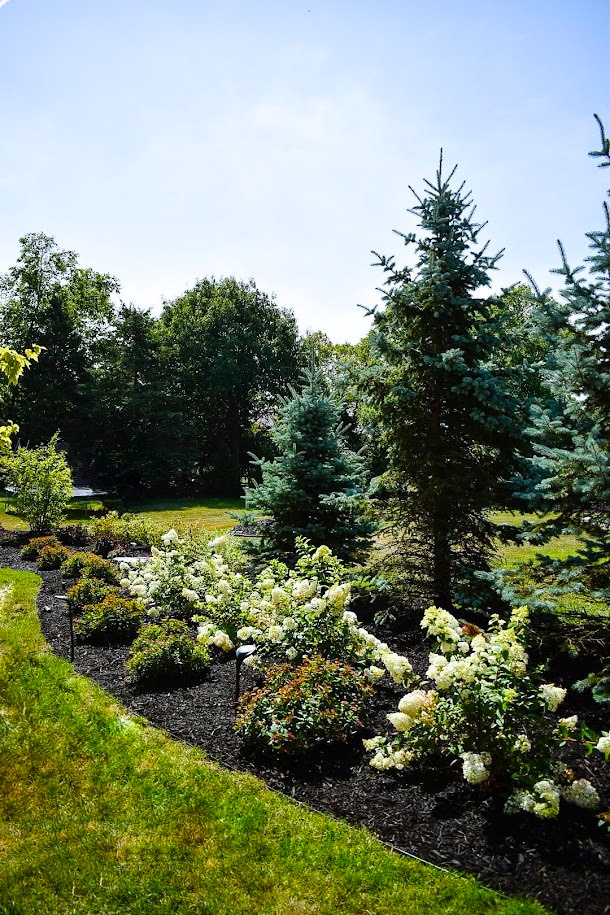
What Are Three Important Qualities for Landscaping?
When evaluating any landscape project or ongoing service relationship, three qualities separate excellent results from average ones.
1. Site-Specific Knowledge: Local Expertise Makes the Difference
A landscape plan that does not account for your property's specific drainage, soil, sun exposure, and microclimate conditions is a generic plan, not a professional one.
Michigan's Downriver region presents a distinct set of conditions that require local expertise: clay soils that demand amendment and drainage planning, cold winters that require hardscape materials and installation methods rated for significant freeze-thaw stress, and summer heat and humidity that influence both plant selection and lawn maintenance schedules.
Our team's familiarity with these conditions, built over years of project work across Wayne and Monroe County, informs every recommendation we make.
2. Integration Across Services: One Team, One Vision
A landscape that was designed by one company, installed by another, and maintained by a third rarely performs at its best.
When the team that designs a space also builds and maintains it, the transition between stages is coherent. Installation crews know exactly what the design called for. Maintenance programs are built around the specific plants, irrigation zones, and hardscape materials that were installed.
Our single-contractor model at GLC Landscaping delivers that integration on every project, which is why our clients describe results that hold up rather than deteriorate.
3. Communication: The Foundation of a Lasting Partnership
A landscape project or service program is a partnership. Homeowners who understand what is being done and why, and who receive honest and responsive answers when questions arise, make better decisions about their properties and experience less frustration when challenges emerge.
Eileen and Gino Lucia built GLC on the principle that clients always reach a real person when they call. That commitment to clear, accessible communication is not a nice-to-have in this industry. It is the foundation of a relationship that produces consistently great outdoor spaces.
Your Landscape, Built for the Long Haul
The outdoor living space you have been imagining deserves the attention of professionals who understand every stage of its life. From the design conversations that set the foundation to the ongoing lawn maintenance and seasonal care that keep it thriving through Michigan's demanding climate, every decision in a landscape's lifecycle matters.
GLC Landscaping serves Flat Rock, Grosse Ile, New Boston, Trenton, Woodhaven, Riverview, and communities throughout Wayne and Monroe County. Explore the full range of services at GLCLandscapingInc.com or contact us today to start the conversation.
Contact GLC Landscaping to schedule your landscape consultation.
Related: Woodhaven, MI's Top Landscape Services to Enhance Your Outdoor Living Space
About the Author
GLC Landscaping & Pools is a full-service landscaping company that over-delivers. They believe that a beautiful landscape can transform residential and commercial properties, but most home and business owners don’t have the time to design, build, and maintain an outdoor space. With a goal to elevate your property to its fullest potential, GLC can help you spend more quality time outside.
